
FROM SKETCH TO SILK
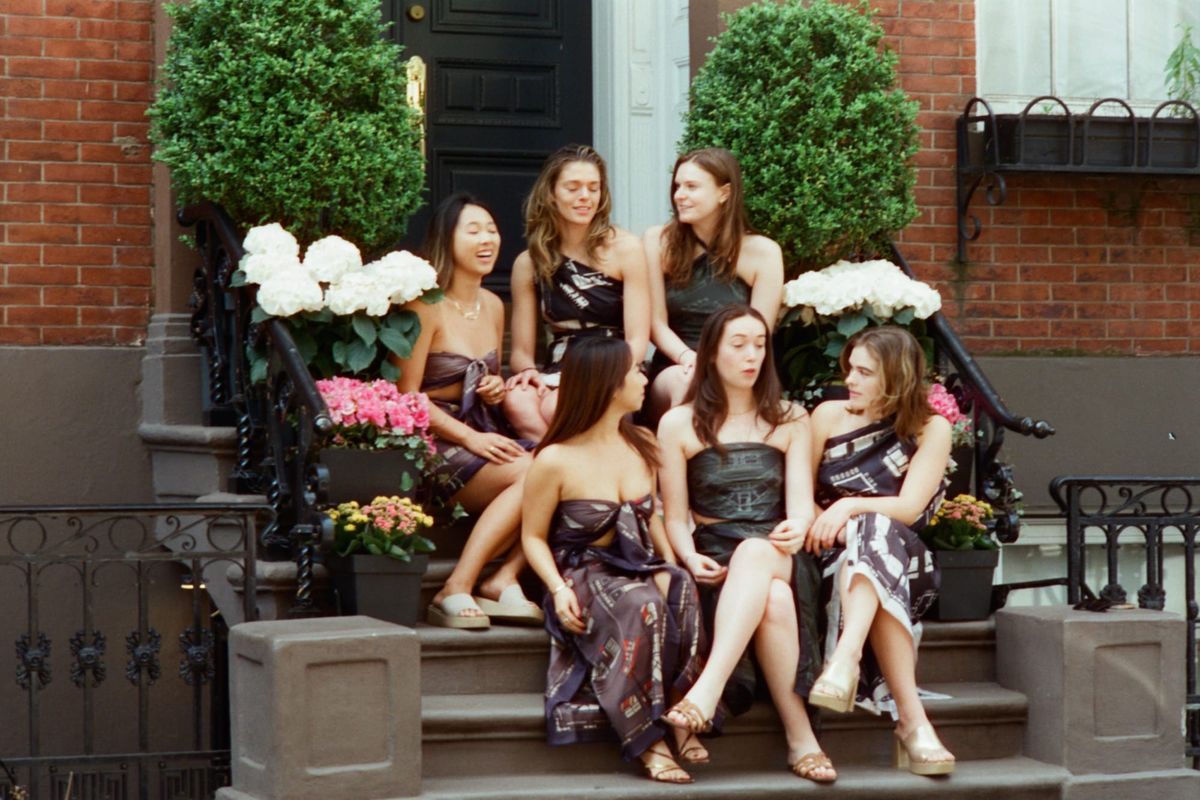
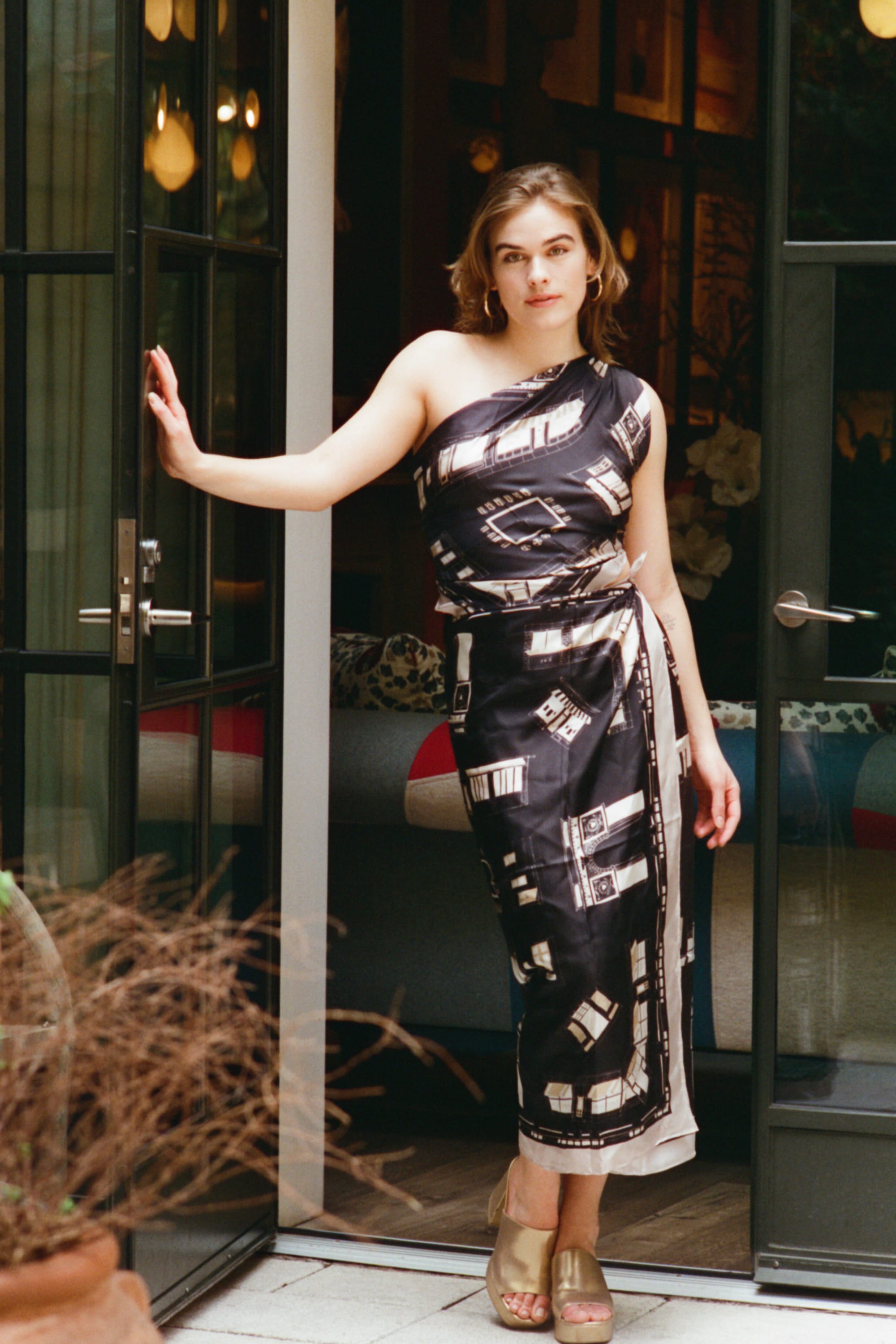
Some careers begin with a straight line. Others bend, split, and redraw themselves. Liv trained as an architect and spent her early years working in an interior architecture firm before deciding to fold her eye for space and structure into something more delicate: silk. With The Clearly Collective, she translates architectural forms into scarves, turning details of buildings into patterns that can be worn, carried, gifted, and passed on. It is work that is intimate and expansive at once, a practice built from memory, texture, and the belief that design does not stop at walls.
What follows is her story, in her own words.
⸻
Beginnings
If I really go back to the beginning, The Clearly Collective did not start as a business idea at all. It started as the way I showed care for the people in my life. I was always making art for my friends. For birthdays, Christmas, or moments that mattered, I gravitated toward handmade gifts. I could always buy something, but I loved the idea of giving something that felt personal and intentional, something that showed time and thought.
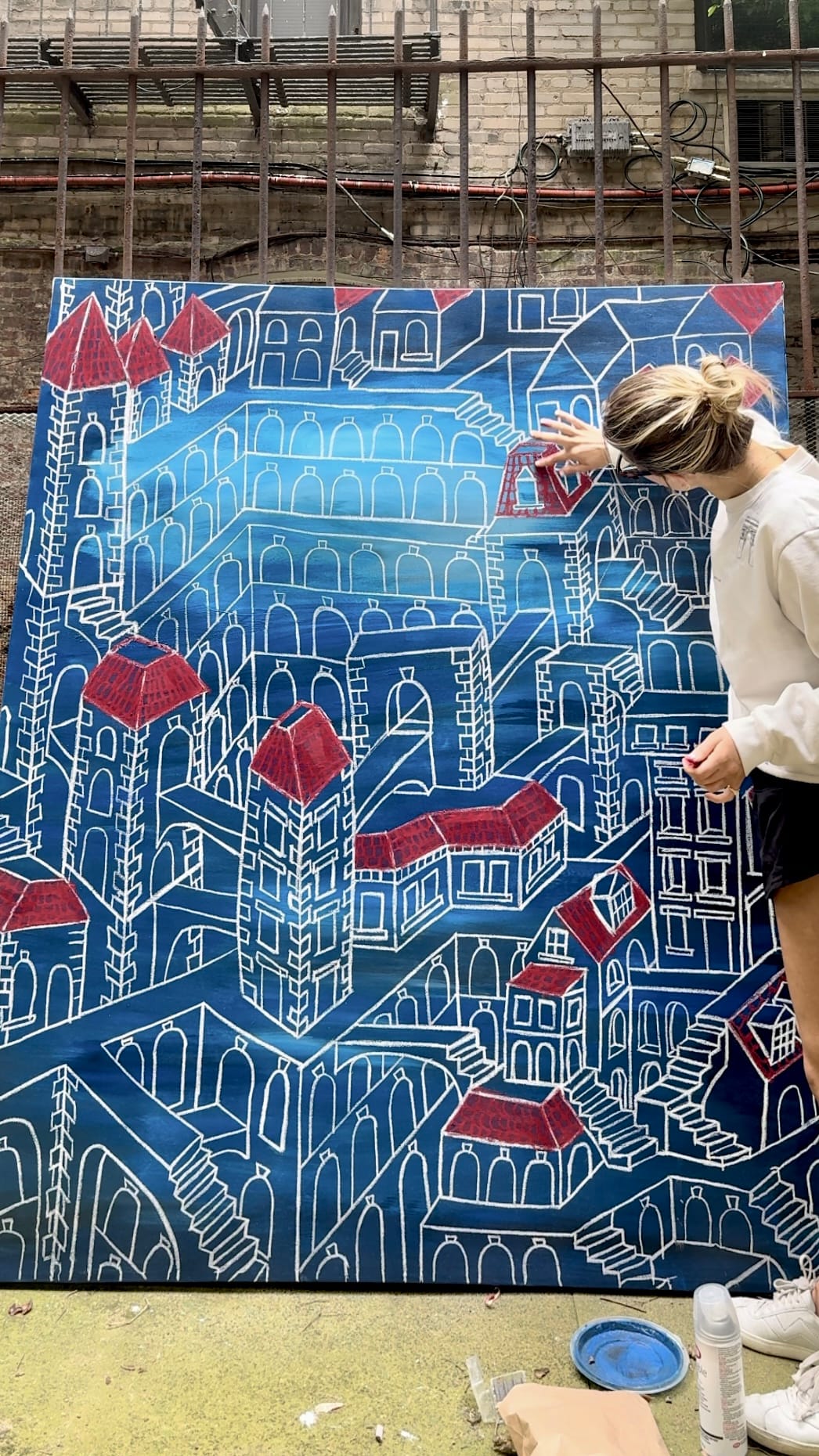
For a while, that meant drawing custom prints for friends. I would sketch something meaningful to them, frame it, and give it as a gift. Later, that evolved into drawing directly onto clothing. I started hand drawing designs onto white jeans for friends, personalizing them with their New York City block, their favorite bar, or a place tied to a memory. Those pieces were incredibly specific, and people loved them. The response was what made me pause and think there is something here, but I need a way to make more of these without losing what makes them special.
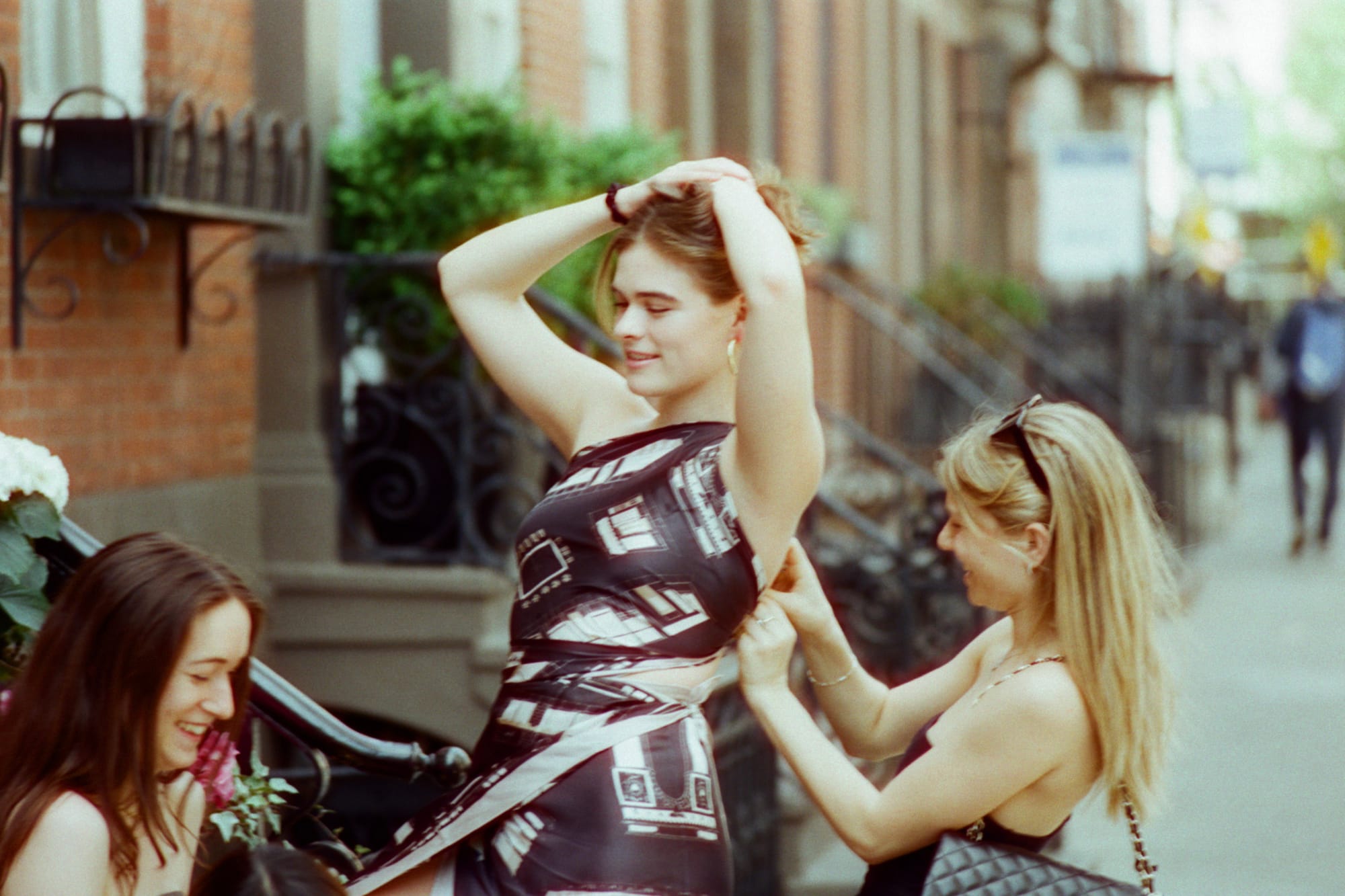
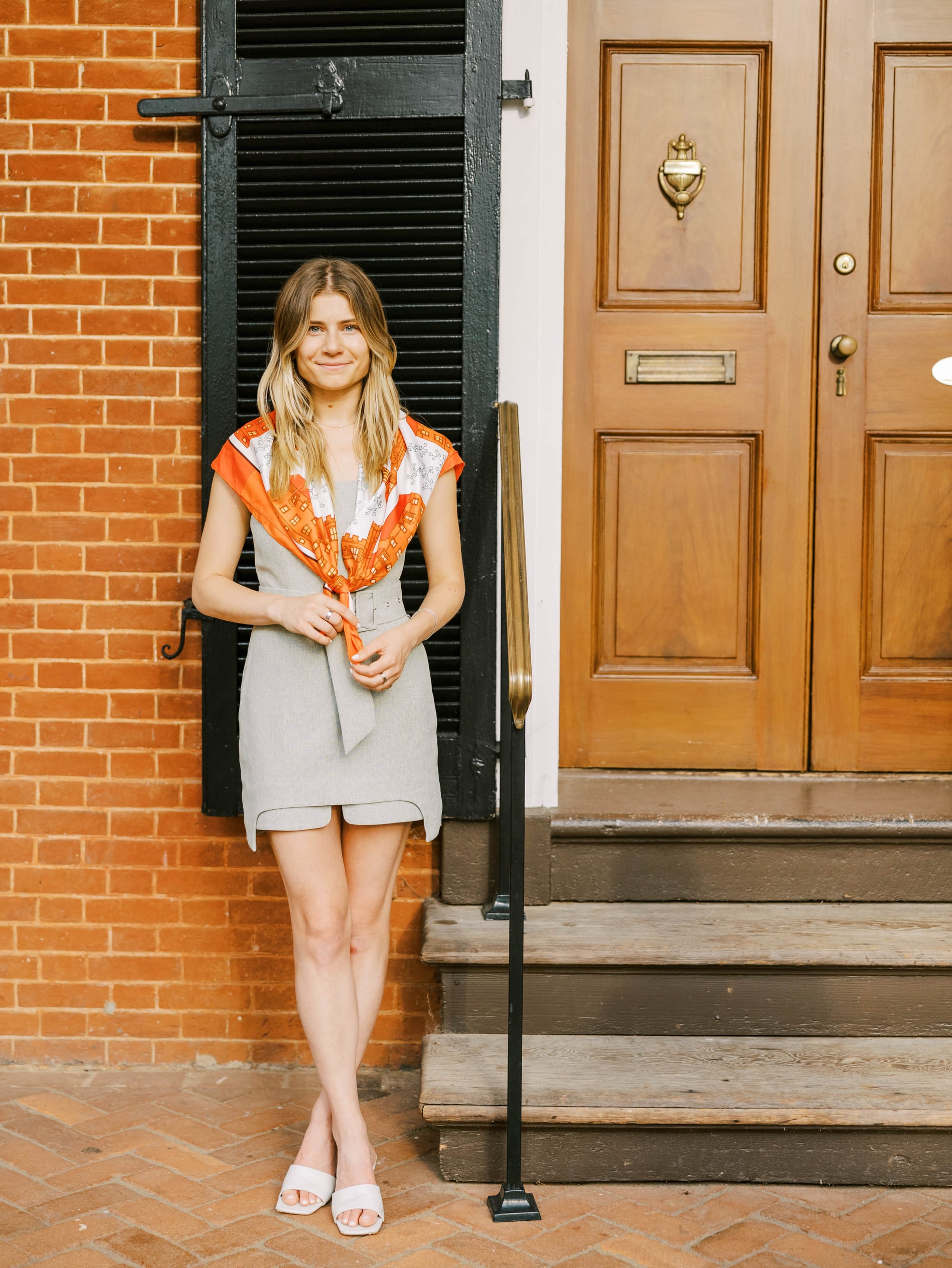
That is where scarves entered the picture. A scarf felt like the perfect canvas. It is elevated, functional, timeless, and intimate. It is something you actually live with. I wanted a medium that people would keep, wear, and associate with a place or chapter of their life.
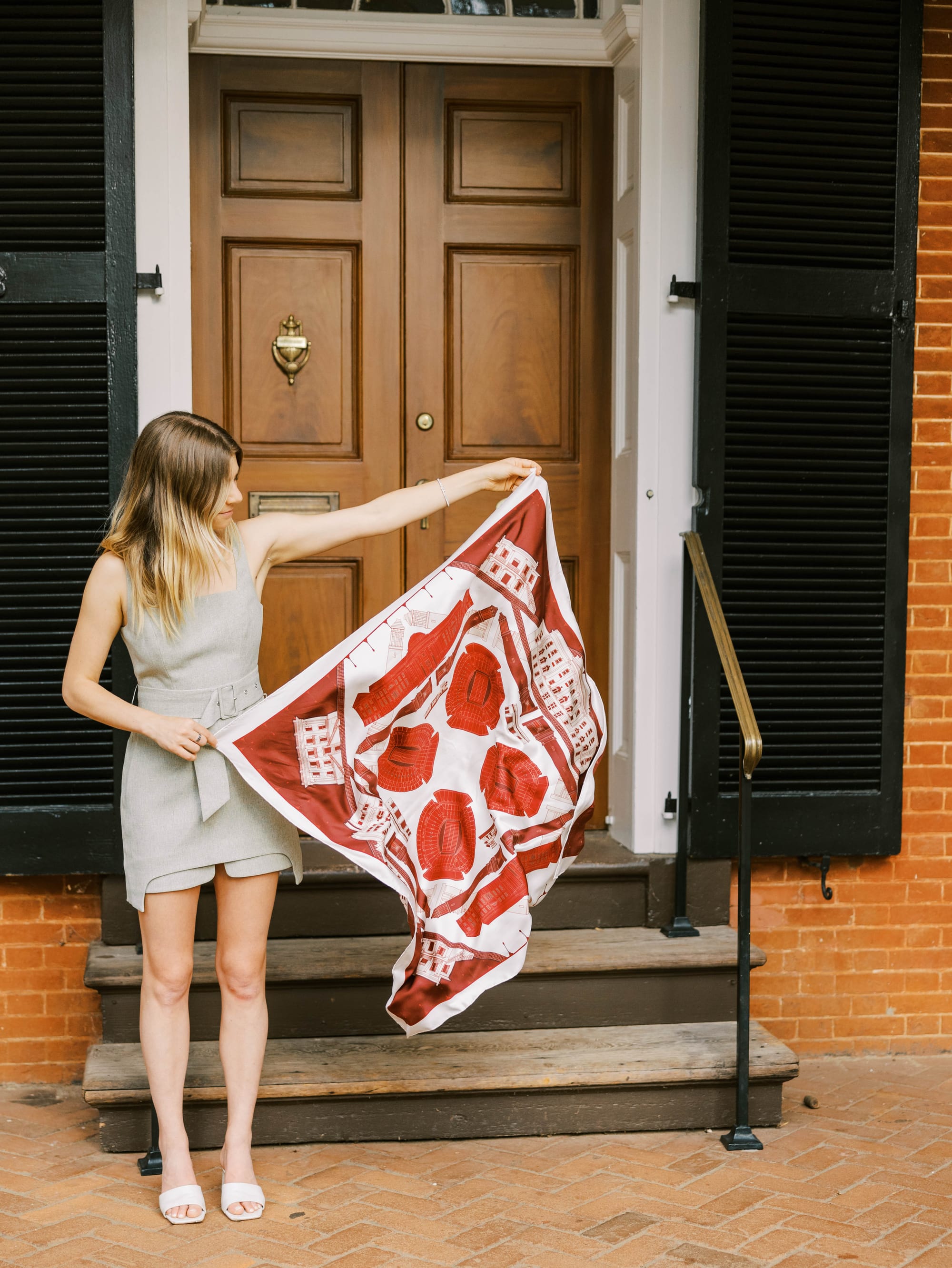
The first scarf I designed was inspired by a place that unified many of my friendships at the time, my university. What mattered to me about that experience was never logos or school symbols. It was walking up and down the Lawn, passing the Rotunda, moving through spaces that felt unchanged year after year. Those architectural moments held memory. They shaped friendships, routines, and growth.
As I designed that first piece, I brought my friends into the process. I used Instagram to ask questions like what part of this place stayed with you and what spaces do you think about when you think of home. That collective reflection shaped the final design.
That was the moment I realized architectural ideas could live beyond buildings. Architecture is emotional. It holds memory across generations. When a place remains visually consistent, it allows memory to flood back. Translating that permanence and emotion into something wearable felt like a natural extension of what architecture already does.
⸻
The Leap
For about a year, I balanced my architecture job and The Clearly Collective at the same time. My days were tightly structured. I would get to the office early and work on my own projects from seven to nine in the morning, do my full day job, work through lunch, finish at six, then go home and continue working on client projects late into the night. That rhythm became normal for me.
The real shift happened when projects started demanding more than late nights. They required travel and in person presence. I remember one specific day clearly. I was pitching a major fashion brand during my lunch break. I was watching the clock constantly, calculating elevator delays, travel time, and how late I would be returning to work. I remember thinking how uncomfortable it felt to squeeze something so important into such a narrow window.
Even reducing my architecture job to four days a week was not enough. I loved the people I worked with and genuinely enjoyed my job. They were incredibly supportive. But I was running out of hours. The opportunities I was being offered felt rare and time sensitive. I knew my day job would always exist in some form. These moments would not.
The leap was not about feeling ready. It was about choosing. There was no safety net, no big savings cushion, and no clear financial plan. It was a decision to say yes to the work I had already proven I could earn, even if it felt uncomfortable.
I sensed early on that traditional architecture was not my long term path. I found myself bogged down in technical details that did not excite me, repetitive unit layouts or detailing the same condition over and over. Architecture firms require patience in the early years, and those years are essential, but I was impatient to design, create, and see impact.
I chose architecture school because it allowed me to be creative while still being practical. I was not going to art school, and architecture felt like the right balance. When I found a medium where I could design, produce, and connect emotionally with people more immediately, I knew that was where I belonged.
The Process
Every scarf begins with defining the place and its purpose. Is this a city, a destination, a brand, or a community. Lately, I have been focused on cities that represent life after college. I have done many collegiate scarves, but I started thinking about what comes next for my customer. Often, it is the first city they move to, the place where independence and identity form.
Once the place is defined, I start by listening. There is always a crowdsourcing phase. I ask people what matters to them, and I am specific about what I am not looking for. I am not interested in tourist landmarks. I want the spaces that shaped daily life.
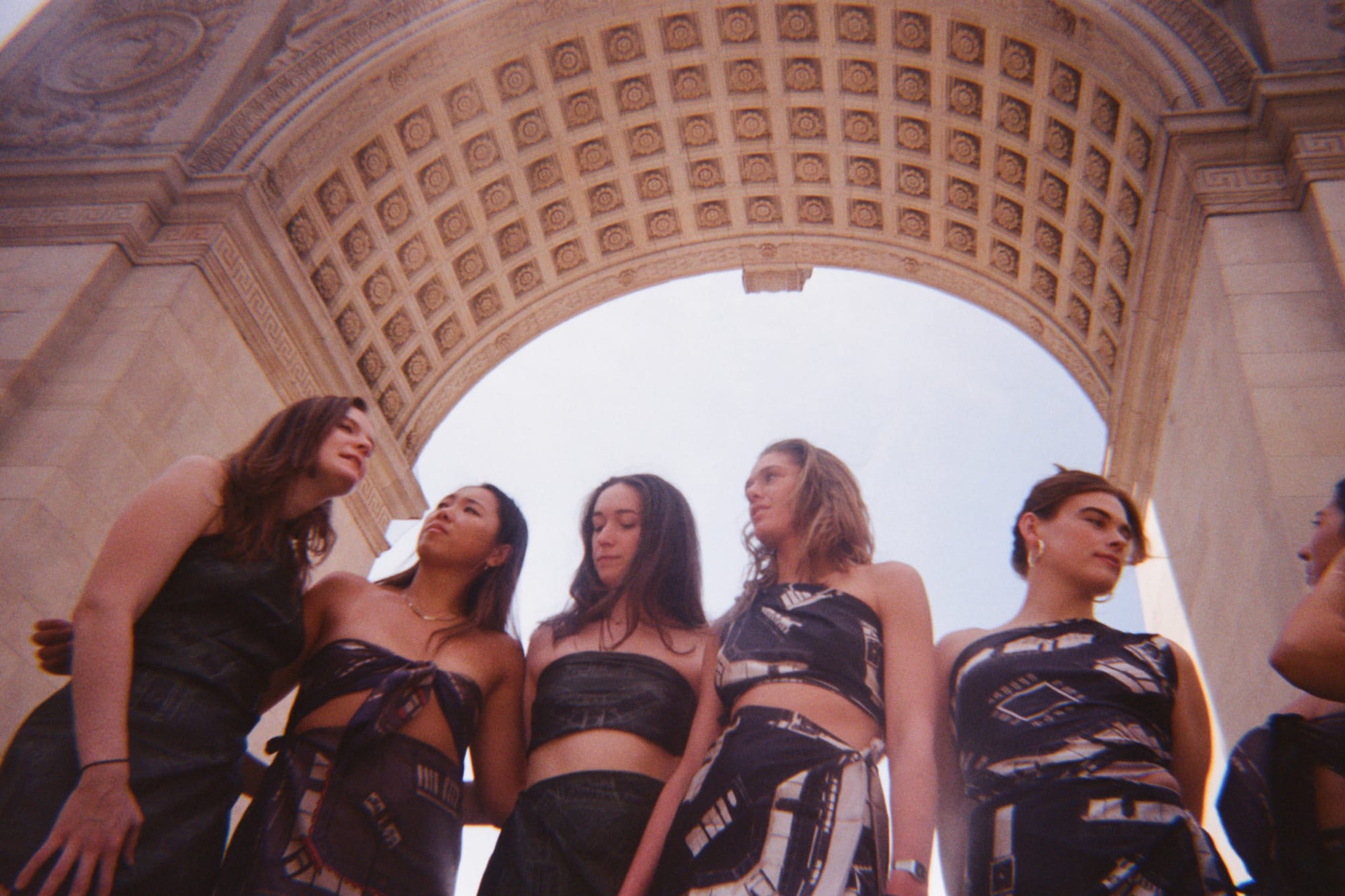
Using New York as an example, one of the most meaningful places to me is the West Fourth Street subway stop. It is not beautiful, but it represents routine, movement, and a specific phase of my life. Seeing it instantly brings back memory. That is the kind of architecture I care about.
From there, I compile a long list of elements, refine it, and narrow it down to the ten or twenty that feel most emotionally resonant. Then I start drawing. I might begin with a loose sketch, but the design evolves organically. The architecture finds its own symmetry and balance as the elements come together.
Color comes later. I usually develop two colorways and involve my audience in the decision. Sampling is where everything comes to life. Colors behave differently on silk than on screen, and that is where refinement happens. Once it feels right, it goes into production. The entire process is collaborative and intentionally slow.
⸻
Translation
I always say that what I do is translation. The narratives I work with are rarely my own. They belong to the place, the brand, or the people who experience it every day. My role is to understand that story deeply and then translate it through my visual language and design style.
When I am working with a corporate client such as the Ritz Carlton, the process starts with immersion. I spend time on site. I walk the property. I pay attention to how people move through the space, where they linger, what feels intentional versus habitual. I talk to everyone I can, not only leadership, but the chef, the florist, the concierge, the head of guest experience. I want to understand what makes someone come back year after year and what moments define their stay.
From those conversations, patterns emerge. There are rituals, traditions, and emotional touchpoints that matter more than surface aesthetics. My job is to synthesize all of that information into a design that feels cohesive and wearable, while still allowing someone else to project their own memories onto it.
My style is the lens, not the story. I am not imposing my narrative. I am interpreting theirs. The success of a piece is when someone sees it and feels like it represents their experience, even though it was filtered through my hand.
⸻
Slowness
Slowness is one of the most important parts of my process. These designs are not trend driven. They are not meant to react to what is happening in fashion that season. They are meant to last, physically and emotionally.
That pace allows space for reflection, refinement, and collaboration. It gives room for people’s memories to surface and be honored. It gives me time to test, revise, and make sure the design feels considered.
The result is something people keep. These are pieces people return to because they hold meaning, and that meaning comes from taking the time to get it right.
⸻
What Stayed
Design thinking never left me. Architecture school taught me how to observe before creating. The process starts with understanding context, user experience, and narrative before form.
In architecture, that might mean a site visit, studying how light moves through a space, or understanding how someone lives day to day. In my work now, it means understanding how someone experiences a place emotionally, what moments stay with them, and how space shapes memory.
That methodology never left me. The output changed from buildings to scarves. The thinking did not. I am still extracting information, distilling it, and translating it into something tangible.
Building It
This entire company was built from the ground up, completely bootstrapped. There was no outside funding, no investors, and no safety net.
I started with nothing more than an Adobe Photoshop subscription that cost about twenty dollars a month. I created digital mockups, shared them on Instagram, and asked people what they thought. I spent about one hundred fifty dollars on a polyester silk sample, had a local tailor finish the edges, and used that sample to run a preorder.
The preorder model allowed me to reinvest directly into the next step. Eventually, I bought a sewing machine and started doing more of the work myself to cut costs. It was a constant push and pull of selling, reinvesting, learning, and building.
Everything grew slowly and intentionally. That foundation shaped how the brand operates today. It taught me discipline, creativity under constraint, and how to build something meaningful without rushing it.
⸻
For Students
Do what pays the bills, especially right after you graduate. That part matters. Always be creating on the side.
Experiment with different mediums. Try things without knowing where they will lead. I drew on paper, T shirts, pants, and anything else I could find before landing on scarves. None of it was precious. It was experimentation.
The moment other people start asking for what you are making, pay attention. That is the signal that you are onto something. Share your work. Talk about it. Someone out there will connect with it, but they cannot connect with what they do not see.
Iteration matters more than perfection. Your medium reveals itself through repetition, not planning.
⸻
The First Piece
The first scarf I ever made will always feel closest to me. It was entirely hand drawn in a sketchbook. I photographed it on my phone, imported it into Photoshop, removed the paper texture, and refined the line work digitally. It was raw, imperfect, and deeply personal.
That piece represents a place that shaped my creativity and growth. It also marks the beginning of this journey. I have returned to that place many times since, through speaking, teaching, and building community, and it continues to give back to me.
That scarf reminds me where everything started and how far the work has evolved. It holds that meaning for me.
⸻
The first scarf began in a sketchbook. Today it exists in airports, closets, and gift boxes, folded into lives far beyond its origin.
In the end, what endures is not always the place itself, but the feeling of having moved through it. Liv’s work lives in that space between structure and sentiment. Between monument and memory. Between what stands still and what travels.
It’s a campus that fits inside a square of silk, a city that can travel.
The material is silk. The discipline is architectural. The scale is human.
She did not leave architecture.
She simply brought it closer.
The Clearly Collective
theclearlycollective.com